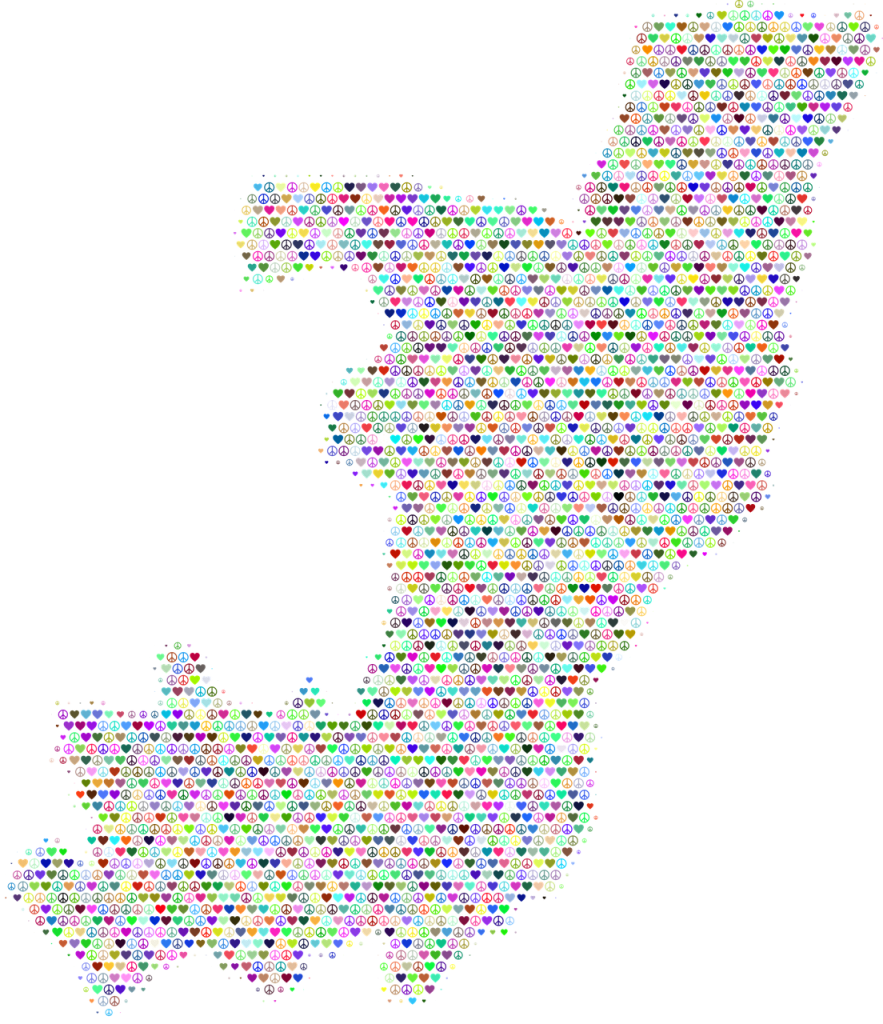
The map of Congo reveals a fascinating natural and human setting offering a precise reading of the geographical regions that make up this Central African country. By scrutinizing the relief of the Congo and its river structure, it becomes evident how these elements shape the organization of the main cities and the economic dynamics of the territory.
Discovery of the main characteristics of the map of Congo and its diverse relief
The relief of Congo illustrates a varied topography ranging from low coastal plains in the west to mountain ranges such as those of Mayombe and Chaillu, which extend to the south. This geographical diversity supports an ecological richness which is manifested in particular by the vast tropical forests covering a large part of the country.
The geography of Congo is also marked by the presence of major river basins, with the Congo and Oubangui rivers providing crucial natural pathways for transport and the economy. These rivers allow navigation between Brazzaville, the capital, and the northern border, although the rapids and waterfalls beyond limit river navigation.

Importance of river basins and tropical forests in local economy and culture
The geography of Congo, with its rich river basins, profoundly influences daily life and economic activities. The Congo River is a vital axis, crossing Brazzaville and serving as a natural link with Kinshasa. The capital, nicknamed Congo-Brazzaville, thus reflects a unique strategic positioning compared to its neighbor, Congo-Kinshasa.
Tropical forests play an essential role in the economy, particularly through forestry and timber exploitation. These ecosystems are home to remarkable biodiversity which contributes to the culture and traditional lifestyles of populations, particularly ethnic groups such as the Bakongo.
Geographic regions, between urban areas and preserved natural spaces
The map of Congo highlights a marked distinction between the south, more densely populated and industrially developed, and the north, largely covered by virgin and marshy forest areas. Brazzaville and Pointe-Noire stand out as the two most dynamic urban centers, linked by an important railway line for commerce.
The Niari basin, in the southwest, plays a central role in agriculture, benefiting from more fertile soils and a favorable climate, contrasting with the poorer soils of the north. This region also concentrates mining and oil activity which, combined with fishing, forms the backbone of the local economy.
Contemporary challenges linked to geography and regional planning
Congolese territorial planning faces major challenges linked to its relief and the unequal distribution of its population. While the coastal zone and the southern plateaus concentrate infrastructure and economic activities, the north remains difficult to access, with its poorly developed forests and swamps.
The protection of tropical forests is crucial in a country whose economic development largely depends on natural exploitation. Sustainable management of natural resources, particularly in river basins, represents a key issue to ensure a balance between growth and environmental preservation.