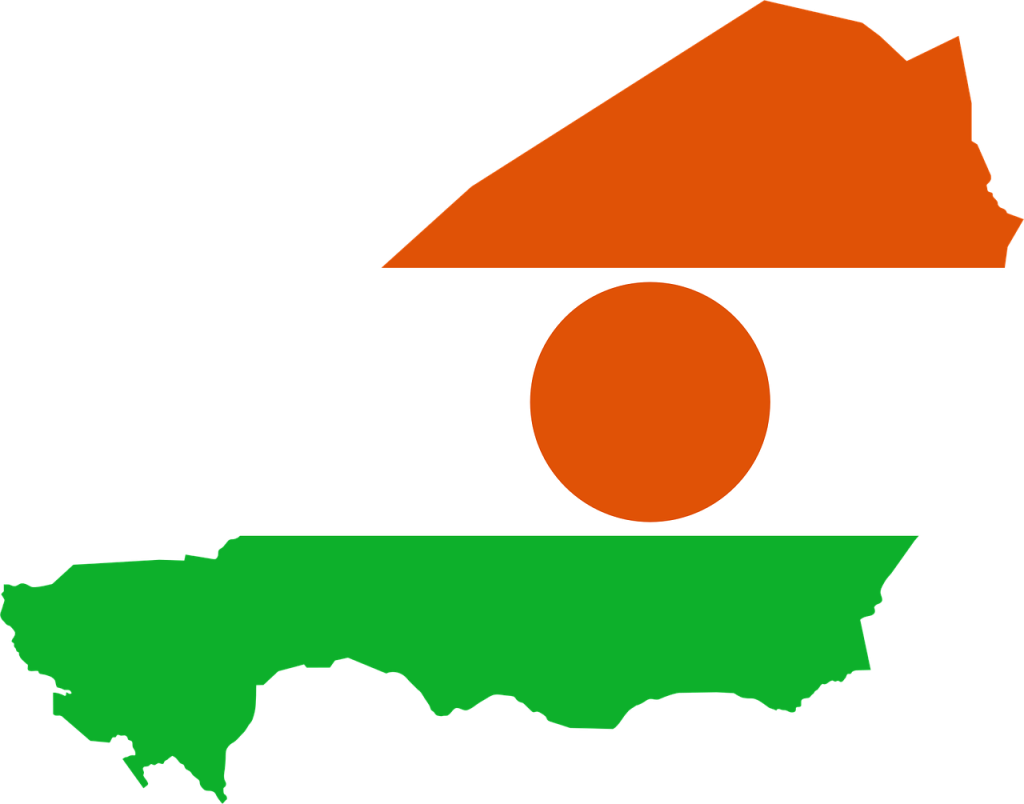
Exploring the map of Niger allows you to understand a territory where vast expanses of desert, essential river networks and a rich cultural mosaic combine. This Sahelian country, without maritime access, displays striking geographical contrasts between the large dunes of the Sahara and the fertile areas irrigated by the Niger River. The population, dynamic and young, lives to the rhythm of traditions inherited from several ethnic groups, while being in the midst of urban and economic change.
Geography of Niger: relief, rivers and varied climate
The landscape of Niger is characterized by a predominance of desert which occupies more than 80% of its territory, particularly with the impressive extent of the Bilma erg. Towards the south, the relief softens and the Azawak region marks the transition towards areas of Sudanian savannah more suitable for agriculture. The Niger River is a vital element that crosses the country for nearly 550 kilometers, bringing life and biodiversity to an otherwise often hostile region.
Temperatures in Niger experience remarkable extremes: Ténéré, for example, can exceed 50°C in the shade, while the rainy season from June to September brings the essential in terms of precipitation, as in the Zinder region where it reaches around 500 mm per year. These climatic variations strongly condition agricultural activity and the availability of water resources.

Borders and administrative division: eight main regions
Niger is divided into eight administrative regions, each governed by a representative designated by presidential decree. These regions – Agadez, Diffa, Dosso, Maradi, Tahoua, Tillabery, Zinder, and the capital Niamey – reflect the geographical and cultural diversity of the country. Niger’s borders place it at the crossroads of seven nations, including Algeria, Libya, and Nigeria.
Major crossing points like Gaya, Diffa and Assamaka facilitate cross-border trade and commerce. Furthermore, these border areas are strategic for control and security, data to be considered for any logistics or tourism project.
Population and cultural life in Niger: ethnic mosaic and living traditions
With more than 25 million inhabitants, Niger has one of the highest population growth rates in the world, symbolized by a population where more than half is under the age of 15. This youth is distributed between urban and rural areas, with a gradual development of educational infrastructure, although the challenges of access to education remain particularly pronounced in remote areas.
Nigerian society brings together several ethnic groups such as the Hausa, Djerma-Songhai, Fulani, Toubous and Tuareg, each continuing in their ancestral rites. These communities are also deeply marked by religion, notably Sunni Islam, which punctuates the calendar with celebrations such as Tabaski or Maouloud.
The cultural and heritage riches of Niger
Niger has a unique cultural heritage, with craftsmanship that shines particularly through Tuareg silver jewelry and indigo fabric. Traditional music remains alive, with instruments like the Fulani flute and tom-toms punctuating festivals such as the Cure Salée d’In-Gall, a major moment that brings together Fulanis and Tuaregs around ancient commercial practices.
The historical importance of the country is also visible in its UNESCO World Heritage sites, including the old market of Zinder or the archaeological oases of Bilma. These places attract history and archeology enthusiasts, while giving a strong heritage dimension to the regions of Niger.
Nigerian economy and infrastructure: natural resources and logistical challenges
Niger’s economy is largely anchored in subsistence agriculture, with crops such as millet, sorghum and rice mobilizing the majority of the active population. At the same time, livestock production continues to be a major activity in rural areas. Uranium exploitation, particularly at Arlit, constitutes the primary source of exports and a strategic economic lever.
In terms of infrastructure, the road network remains limited despite projects supported by institutions such as the African Development Bank. The electricity coverage rate plateaus around 40%, with efforts underway to interconnect the country to the West African grid via initiatives such as the West Africa Power Pool. Telecommunications have developed significantly, notably thanks to the rise of mobile money, which now reaches around 90 subscribers per 100 inhabitants, thus revolutionizing access to financial services.
Training opportunities related to services and hospitality in Niger
In this context of growth and transformation, activities related to hospitality and services are experiencing growing demand. For example, training as a versatile or commercial ground handling agent represents an effective way to integrate a booming sector. These specialized training courses make it possible to meet the specific needs of air and land transport in the country.
Moreover, the preparation of meal trays and the profession of welcome agent are among the skills sought in the current Nigerian economy. These qualifications are accessible via adapted courses available on several platforms.
To find out more, you can discover training courses such as multipurpose ground handling agent training or commercial ground handling agent training, which offer concrete and operational know-how to grasp regional market opportunities.